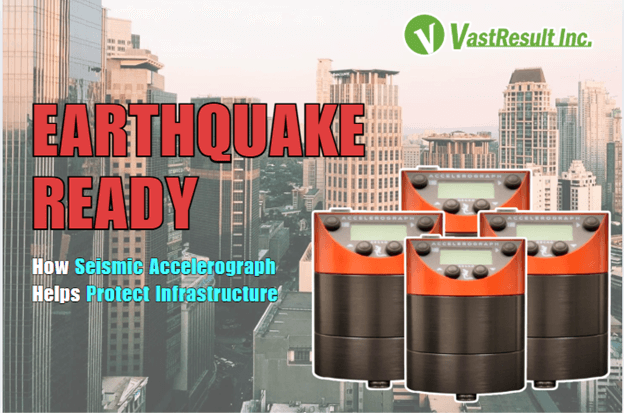
Earthquake-Ready: How Seismic Accelerographs Help Protect Infrastructure


Metro Manila’s skyline continues to grow taller and denser, but so does the need to protect that growth from a hidden but ever-present threat: earthquakes. As the city builds upward and outward, seismic safety must grow alongside it. This is where seismic accelerographs come in, not as optional extras, but as essential tools in modern infrastructure resilience.
Seismic accelerographs are instruments designed to detect and record strong ground motion during powerful earthquakes. Unlike regular seismometers that measure all types of ground vibrations, accelerographs focus on capturing the kind of violent shaking that damages structures. These devices don’t just tell us that an earthquake happened—they show how the ground moved and how buildings responded.
Accelerographs are often installed in buildings, bridges, and critical facilities. When an earthquake occurs, they record how the structure moved, how fast, in what direction, and for how long. This data is crucial in evaluating whether a structure has sustained damage, needs repair, or should be evacuated.
For engineers and safety officers, this means faster, evidence-based decision-making in the aftermath of a quake. In a high-density area like Metro Manila, where a single collapsed structure can have wide-reaching effects, this insight is invaluable.
Accelerographs provide real-world data that influence national building standards, particularly the National Structural Code of the Philippines (NSCP). By analyzing how various buildings performed in past earthquakes, engineers can refine structural designs to better withstand future quakes.
This isn’t just about withstanding damage, it’s about avoiding catastrophic failure. With every new data point, future buildings become smarter, stronger, and more earthquake-ready.
When the ground stops shaking, the chaos doesn’t end. Emergency responders need to act fast—but they also need to know where to go first.
Accelerographs help identify which buildings and areas experienced the strongest shaking. This allows disaster response teams to prioritize search-and-rescue operations, allocate medical resources efficiently, and avoid wasting time in zones that were less affected.
It also prevents unnecessary building closures. Instead of evacuating an entire office tower, officials can determine whether the structure truly sustained damage or if it’s safe to reoccupy.
Beyond earthquakes, accelerographs can be used for ongoing structural health monitoring. By measuring vibrations caused by daily operations, wind, or nearby traffic, engineers can detect early signs of structural fatigue or weakening.
In effect, they serve as a building’s heartbeat monitor quietly recording data that helps spot potential issues long before they become serious.
As more buildings and infrastructure integrate accelerographs, there’s an added benefit: trust. Tenants, employees, and the general public gain confidence knowing that a building isn’t just compliant with safety codes it’s actively monitored. And in post-earthquake situations, building owners can show verifiable data proving that their structure remains safe.
Installing accelerographs may not be as visible as retrofitting walls or adding emergency exits but their impact is just as critical. In a region where the next big earthquake isn’t a matter of if but when, these devices are an investment in lives, safety, and urban resilience.
Metro Manila’s infrastructure boom must be matched by a boom in disaster preparedness. Seismic accelerographs are the quiet guardians of our cities recording, reporting, and helping us recover. They turn raw ground motion into actionable knowledge, and in doing so, help us build a city that’s not just taller and stronger but truly earthquake-ready.
Let’s make seismic instrumentation not just a technical detail, but a standard in every major structure we build.
Contact VastResult at (02) 8404 0740 or email us at sales@vastresult.com.